About Cancer
Cervical cancer grows from abnormal cells in the lining of the cervix that divide in an uncontrolled way. If not caught early, cancer cells can grow into nearby tissues and spread to other body areas.
Find out more about cancer how it starts
The cervix is the lower part of the womb (uterus), also called the neck of the womb. It is a small round organ and a strong muscle. It has an opening called the os. The womb and the cervix are part of the female reproductive system.
The reproductive system is made up of the:
vulva
vagina
womb (uterus), including the cervix
fallopian tubes
ovaries
The diagram shows the position of these organs in the body.
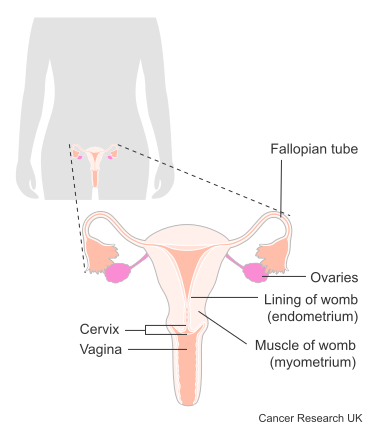
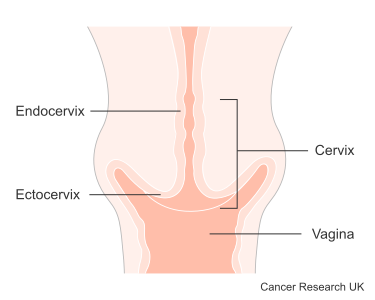
The cervix forms a canal that connects the top of the vagina to the lower part of the womb. This is called the endocervical canal.
The cervix has 2 parts:
ectocervix – the outer surface of the cervix
endocervix – the inside (the canal) of the cervix
This video shows more detail about the female reproductive system.
A layer of skin-like cells covers the ectocervix on its outer surface. These cells are called squamous cells.
Glandular cells that produce mucus cover the endocervix.
The skin-like cells of the ectocervix can become cancerous, leading to squamous cell cervical cancer. This is the most common type of cervical cancer.
The glandular cells of the endocervix can also become cancerous, leading to adenocarcinoma of the cervix.
Read more about the types of cervical cancer
The transformation zone is where the area of glandular and squamous cells meets. Most cervical cancers start here.
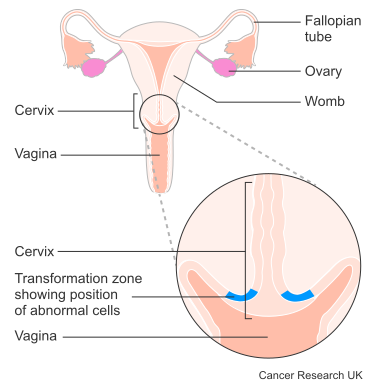
The transformation zone is the area your doctor or nurse checks during cervical screening.
Cervical screening is not a test for cancer. It is a test to look for HPV. If HPV is found (HPV positive), further tests look for abnormal cervical cells. If left untreated, the abnormal cells might develop into cancer.
Find out about cervical screening
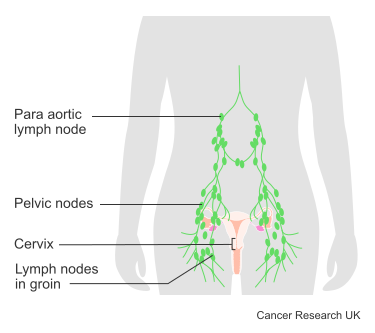
Like all other body areas, there are lymph nodes around the womb and cervix. Lymph nodes (lymph glands) are part of the lymphatic system. They:
help to protect the body against infections
filter, drain and circulate the tissue fluid around all body cells and tissues. This fluid is called lymph fluid
Lymph nodes are also important in cancer. The lymph fluid around the cancer drains to the nearest lymph nodes. So, if any cancer cells break away from the tumour, the first place they can go is to the nearest lymph nodes.
When you have surgery for cervical cancer, your surgeon usually takes out some lymph nodes. They send them to the laboratory to check for cancer cells.
Read more about the lymphatic system and cancer
Cervical cancer is most common in women in their mid to late 30’s.
Trans men and non-binary people assigned female at birth can develop cervical cancer. This can happen when they haven't had an operation to remove their womb and cervix (total hysterectomy).
The main cause of cervical cancer is long lasting (persistent) infection of certain types of the human papillomavirus (HPV). HPV is a common virus. In most people, the immune system clears the infection without any problems.
Around 3,300 women are diagnosed with cervical cancer in the UK each year. That’s around 9 cases diagnosed every day.
Find out more about HPV and the risks and causes of cervical cancer
Early cervical cancers and pre cancerous cell changes don't usually have symptoms. Not everyone diagnosed with cervical cancer has symptoms. But symptoms can include vaginal bleeding and pain or discomfort during sex.
There are several possible risks and causes of cervical cancer, including human papilloma virus (HPV), which is a major cause.
You usually start by seeing your GP if you have symptoms that could be due to cervical cancer. Your doctor will then decide whether to do tests or refer you to a specialist.
Your GP or specialist might arrange for you to have tests. This might include a physical examination, blood tests, a colposcopy, LLETZ or cone biopsy. You might also have an MRI, PET-CT or chest x-ray.
Cervical screening is a way of preventing cervical cancer. It is not a test for cancer. It tests for a virus called human papillomavirus (HPV).
An abnormal cervical screening test result means that you have changes in the cells covering the neck of your womb (cervix). Abnormal cervical cells are not the same as cervical cancer.
The stage of a cancer tells you about its size and whether it has spread. The type means the type of cell the cancer started from. The grade means how abnormal the cells look under the microscope.
Advanced cervical cancer means that a cancer that began in the cervix (the neck of the womb) has spread to another part of the body. Or the cancer has come back after treatment.
Last reviewed: 04 Sept 2023
Next review due: 04 Sept 2026
This section has been written, reviewed and updated by Cancer Research UK’s Patient Information Web Team. Thanks to the expert medical professionals and people affected by cancer who have helped to review this information.
Dr Gemma Eminowicz (Consultant Clinical Oncologist)
Mr Aslam Shiraz (Consultant Gynaecological Oncologist)
Rajvinder Dhillon (Advanced Gynaecology Nurse Practitioner in Colposcopy)
Our lay reviewers

About Cancer generously supported by Dangoor Education since 2010. Learn more about Dangoor Education


Search our clinical trials database for all cancer trials and studies recruiting in the UK.

Connect with other people affected by cancer and share your experiences.

Questions about cancer? Call freephone 0808 800 40 40 from 9 to 5 - Monday to Friday. Alternatively, you can email us.
