
About Cancer
Vulval cancer is cancer of the vulva. It is also called vulvar cancer. The vulva is part of the female reproductive system. Vulval cancer can affect anyone who has a vulva. This includes women, trans men and people assigned female at birth.
Find out more about cancer and how it starts
The video below talks about the different parts of the female reproductive system. It lasts for 1 and a half minutes.
The vulva is the area between the legs that includes the female external sex organs.
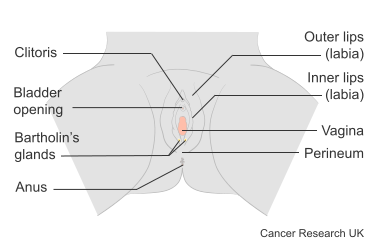
The vulva includes 2 pairs of lips. These are the outer lips called the labia majora, and the inner lips called the labia minora.
Between these lips are 2 openings:
the entrance to the vagina
the bladder opening - this is a short tube called the urethra that carries urine from the bladder to the outside of the body
At the front of the vulva is the small organ called the clitoris. The clitoris helps a woman reach a sexual climax.
The rounded area of fatty tissue in front of the pubic bone is called the mons pubis.
Just below the vagina, on either side are 2 glands called Bartholin’s glands. They make a fluid, which acts as a lubricant during sexual intercourse.
The opening to the back passage is the anus. The anus is also close to the vulva but is separate from it. The area of skin between the vagina and the anus is called the perineum.
Vulval cancer can start in any part of the female external sex organs. It most often starts in the outer lips (labia majora) or the inner lips (labia minora).
Most vulval cancers do not form quickly. Usually, there is a gradual change in the cells. First, normal cells become abnormal. Then these abnormal cells may go on to develop into cancer.
VIN is when abnormal cells develop on the surface of the vulva. It does not mean you have cancer. They are pre cancerous changes of the vulval skin. Many women with VIN will not develop cancer.
Some of these abnormal cells will go away without treatment. But other types of VIN need treatment. Finding these abnormal cells early and having treatment if needed can prevent vulval cancer.
Not all types of vulval cancers have a pre cancerous or VIN stage. It is important to see your GP if you have any symptoms. They can tell you about treatments available or refer you to a specialist.
There are different types of vulval cancer depending on the type of cells it starts in. The most common type of vulval cancer is squamous cell carcinoma (SCC).
Find out more about the types of vulval cancer
Vulval cancer is a rare cancer. Around 1,500 people are diagnosed in the UK each year.
Your risk of developing vulval cancer increases as you get older. On average each year more than 40 out of 100 (more than 40%) new cases are in women aged 75 and over.
There are other factors that can also increase your risk of developing vulval cancer.
Not everyone diagnosed with vulval cancer will have symptoms. Things to look out for include an open sore or lesion in the vulva.
We don’t know what causes all vulval cancers. But there are some factors that may increase your risk of developing it including being older and having infections with certain viruses.
You usually start by seeing your GP. They ask about your symptoms and examine you. Your GP then decides whether to refer you to a specialist. There is no national screening programme for vulval cancer in the UK.
You have a number of tests to find out if you have vulval cancer. These include a vulval examination and a biopsy.
Your treatment depends on a number of factors. Surgery is the most common treatment for vulval cancer. Chemotherapy with radiotherapy (chemoradiotherapy) is also a treatment.
Research is looking into prevention, diagnosis and treatments for vulval cancer. Talk to your specialist about any trials you might be able to take part in.
Last reviewed: 27 Aug 2025
Next review due: 26 Aug 2028



