Getting diagnosed
Many people start by seeing their GP if they have symptoms that may be due to skin cancer. Your GP can do some tests to help them decide whether you need to see a specialist. They might:
do a physical examination of your skin
look closely at your mole or skin with a special instrument (dermatoscope)
take or arrange photographs of the mole or abnormal patch of skin
Some GPs have had specialist training and can take a sample (biopsy) themselves.
Find out more about a referral to a specialist
Your GP will examine the abnormal area of skin. They might also check the rest of your skin.
Your GP may also feel around your neck, armpits or groin. This is to see if your are swollen.
It’s not always possible to tell the difference between skin cancer and non cancerous skin conditions.
Your GP might look at your skin through a special instrument called a dermatoscope. It makes things look bigger, like a magnifying glass.
This can help doctors decide if you need to see a specialist.
Find out more about having a dermoscopy
Below are pictures of dermatoscopes.
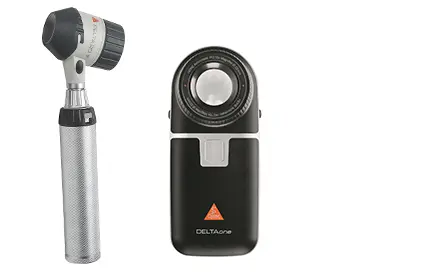
Your doctor may also take photographs of any abnormal areas of skin. Or they might ask you to have them taken at a special clinic. This is called teledermatology.
Photographs make it easier to look for changes over time.
Read more about teledermatology
Your doctor will give you a to numb the area first and then take a sample of skin. They send the sample to the laboratory to be looked at under a microscope.
There are different types of biopsy including:
Your doctor uses an instrument to scrape or shave (slice) off a small piece of the abnormal area. The wound is then burned with an electrical equipment (cauteriser) to seal it. This seals the blood vessels to stop any bleeding (cauterise).
The wound will look like a burn. It forms a scab and heals without the need for stitches.
For squamous cell cancers, you might have this completely removed so it is a treatment at the same time.
Find out more about a shave or scrape biopsy
Your doctor uses a special instrument to take a punch biopsy. They remove a small circle of the full thickness of the skin.
You might need stitches to close the area. Or you might not need them if the area is small, as it will heal well on its own. The stitches stay in for about a week if you have them. You need to go back to the clinic to have them removed. Or your doctor might use soluble stitches, which dissolve on their own.
Your doctor uses a surgical knife to remove a small piece of the abnormal area. They remove the full thickness of the skin.
They then stitch the area closed. The stitches stay in for up to 2 weeks, depending on where the wound is. You may need to go back to the clinic for the nurse or doctor to remove the stitches. Or your doctor might use soluble stitches, which dissolve on their own.
Your doctor uses a surgical knife to remove the whole abnormal area. They also remove a border of healthy tissue from around it.
They then stitch the area closed. The stitches stay in for up to 2 weeks depending on where the wound is. You may need to go back to the clinic for the nurse or doctor to remove the stitches. Or your doctor might use soluble stitches, which dissolve on their own.
It takes about 2 to 4 weeks to get the results of your biopsy. You usually go back to your GP or skin specialist (dermatologist) for these. If you have not heard about your results after this time, contact your GP or hospital.
It isn't common for a basal or squamous cell cancer to spread beyond the skin. So you might not need any further tests or treatment. And some people don’t need to see a specialist.
Find out more about the different types of non melanoma skin cancer
If you have skin cancer and your doctor feels swollen or enlarged lymph nodes near the cancer, then they might do tests to check your lymph nodes. Depending on your situation, you might also have scans to look at the size and position of your cancer. And to check if it has spread.
You might have a lymph node biopsy if your doctor thinks there is a risk your cancer has spread from the skin to the lymph nodes.
Read more about having a lymph node biopsy
CT (or CAT) scan stands for computed (axial) tomography. It is a test that uses and a computer to create detailed pictures of the inside of your body.
You might have this test if your doctor thinks your cancer may have spread to the nearby lymph nodes or another part of the body. This hardly ever happens for basal cell cancers. It is also unlikely for squamous cell cancers if they have been diagnosed early on.
This scan can also be particularly useful if non melanoma skin cancer is affecting the bone.
Read more about having a CT scan
An MRI is a type of scan that creates pictures using magnetism and radio waves. MRI scans produce pictures from angles all around the body and show up soft tissues very clearly.
An MRI scan can also help show up how cancer might be affecting nearby structures such as the nerves. It’s particularly useful for non melanoma skin cancer that has affected places like the eye or salivary glands.
Read more about having an MRI scan
The tests you have helps your doctor find out if you have non melanoma skin cancer and how far it has grown. This is the stage of the cancer.
Read about the stages of non melanoma skin cancer
This is important because doctors recommend your treatment according to the stage of the cancer.
You need treatment to the area if the skin sample contains any cancerous cells. For example, surgery to remove the area completely, or other treatments such as creams.
You might not need any further treatment if you had an excisional biopsy. In the laboratory, the specialist doctor (pathologist) carefully checks the sample under the microscope to make sure there is a border of healthy skin tissue all around it. This is called a healthy margin. You will need more surgery if they have not removed enough healthy tissue. This is important because if any cancer cells are left behind, the cancer can continue to grow.
Find out about the treatments for non melanoma skin cancer
Coping with a diagnosis of non melanoma skin cancer can be difficult. There is help and support available to help you and your family.
Last reviewed: 09 Mar 2026
Next review due: 09 Mar 2029
Symptoms of skin cancer can include: a sore that doesn't heal, an area of skin that looks unusual, red, itchy, bleeds or scabs for more than 4 weeks.
The 2 main types of non melanoma skin cancer are basal cell carcinoma (BCC) and squamous cell carcinoma (SCC).
The stage of cancer tells you its size and whether it has spread. The grade tells you how much the cancer cells look like normal cells.
The main treatment for skin cancer is surgery. Depending on the size of your cancer and how far it has grown you might have a different treatment. Your doctor will talk through any possible treatments with you.
Non melanoma skin cancer includes basal cell skin cancer, squamous cell skin cancer and other rare types.
Non melanoma skin cancer includes basal cell carcinoma, squamous cell carcinoma and other rare types. They tend to develop most often on skin that has been exposed to the sun.



