
Secondary cancer
Secondary lung cancer is a cancer that started in another part the body and has spread to the lungs.
Where a cancer starts is called the primary cancer. If some cancer cells break away from the primary cancer, they can move through the bloodstream or to another part of the body forming a new tumour. This is called a secondary cancer. Secondary cancers are also called metastases (pronounced me-tass-ta-sis).

The secondary cancer is made of the same type of cells as the primary cancer.
If the cancer started in your bowel and has spread to your lung, the areas of cancer in the lung are made up of bowel cancer cells.
This is different from having a cancer that first started in the lung (a primary lung cancer). In that case, the cancer is made up of lung cells that have become cancerous. This is important because the primary cancer tells your doctor which type of treatment you need.
Find out about primary lung cancer
This video is about secondary cancer, it lasts for 2 minutes and 42 seconds.
Any cancer can spread to the lung. The most common cancers to do so are:
breast cancer
bowel cancer
kidney cancer
testicular cancer
bladder cancer
melanoma skin cancer
bone cancer
soft tissue sarcomas
head and neck cancer
Find out about your type of cancer
Symptoms of secondary lung cancer might include:
a cough that doesn’t go away
shortness of breath
ongoing chest infections
weight loss
coughing up blood
chest pain
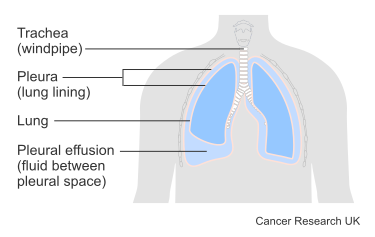
A build up of fluid between the two layers that cover the lung (pleural effusion) stops the lungs from expanding fully. Breathing in can cause shortness of breath, chest pain, and a cough.
Remember, these symptoms can also be due to other more common conditions. If you have any of them, tell your doctor so that they can check them out.
Read about treatment for fluid on the lung (pleural effusion)
There are different tests you might have to diagnose secondary lung cancer. You may have one or more of the following:
chest X-ray
CT scan
PET scan
PET-CT scan
Unfortunately, secondary cancer can’t usually be cured. Treatment for secondary lung cancer usually aims to control the cancer and your symptoms.
Possible treatments include chemotherapy, radiotherapy, hormone therapy and, in some cases, surgery. But some people may be too unwell to have treatment for their cancer.
Find out about treating secondary lung cancer
Most people worry about their outlook (prognosis) when they have a secondary cancer. Your individual outlook depends on many factors including whether the cancer has spread to more than one part of your body, how quickly it is growing and how it responds to treatment.
It is usually difficult to predict and this uncertainty can be hard to deal with. Speak to your doctor who can give you more information about your outlook.
Last reviewed: 24 Aug 2023
Next review due: 24 Aug 2026
A primary cancer is where a cancer starts. Sometimes cancer cells can break away from the primary cancer and settle and grow in another part of the body. This new cancer growth is called secondary cancer.
Treatment for secondary lung cancer usually aims to control the cancer and your symptoms. Possible treatments include chemotherapy, radiotherapy, hormone therapy and, in some cases, surgery.
Coping with secondary cancer can be very difficult. Getting the help and support you and your family need can help.
When someone is dying with cancer, they and their carers can get help and support. This information might help at a very emotional and difficult time.
We have specific treatment information for each cancer type. Choose the cancer type you want to find out about the treatment from this A-Z list of treatments by cancer type.



