Surgery
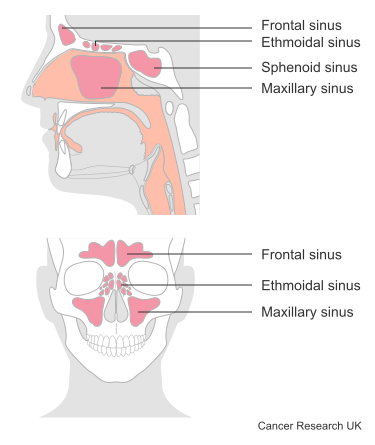
The paranasal sinuses are air cavities in the bones of the face behind the nose. This part of the body is complex and has many important nerves and blood vessels. So, planning and doing the surgery is difficult. Only a specialist surgeon can do your operation.
Your surgeon will consider carefully how your face will look and work after surgery. The main aim is to remove the cancer. They will also try to remove only a small amount of healthy tissue and bone around the area.
The amount of surgery you need depends on the position of the cancer. There are several different sinuses.
The surgery also depends on the stage of your cancer. This means the size of your cancer and whether it has spread. Your doctor might not be able to tell you exactly what stage your cancer is until after the surgery.
Read more about the stages of paranasal sinus cancer
The ethmoids are a group of sinuses next to the upper nose on each side which forms the sidewall of the eye socket and part of the base of the skull.
Surgery to remove a tumour in the ethmoid sinus is called an ethmoidectomy. It is usually done using an endoscope but can be done through a cut in the overlying skin (external fronto ethmoidectomy).
If your cancer is in the maxillary sinus, you may have a maxillectomy. This means removing part or all of your upper jawbone.
The maxilla bone forms the upper jaw and the front part of the roof of the mouth. It also forms the side walls of the nasal cavity and part of the floor of the eye sockets. It helps to shape the tissue around the eyeball (orbit), the nose, and the roof of your mouth (the hard palate).
There are several types of maxillectomy. The type you have depends on exactly where the tumour is and whether it has spread into nearby tissue.
A partial maxillectomy means leaving one or more of the bony walls in place.
A total maxillectomy means removing the whole maxilla bone.
A radical maxillectomy removes the whole bone and also some nearby structures.
To carry out these operations and reach the cancer your surgeon can do two things:
cut into the skin along the side of your nose, from the eyebrow or the eyelids down to (or through) the upper lip
make a cut inside the mouth under the upper lip, which means you don't have a large scar on your face
It is important to discuss with your surgeon the type of cut they will use. All these operations will leave a space in the roof of your mouth.
Your surgeon may be able to fill the space using a piece of bone from another part of your body. Or you can have an artificial structure, called a prosthesis, to fill this space. The prosthesis is similar to a denture plate. A restorative dentist (prosthodontist) makes the prosthesis.
The prosthodontist can create replacement teeth to attach to the new jaw bone. If you are going to have any dental replacement, you usually have radiotherapy first.
This type of surgery is a big operation and changes your appearance a lot. You will need to take some time to recover and adjust.
Read more about coping with changes after surgery
During a craniofacial resection, your surgeon can remove the affected:
sinuses
parts of the base of the skull
parts of the eye sockets
You might need a craniofacial resection if you have cancer in the:
ethmoid sinuses
frontal sinuses
sphenoid sinuses - in some people
This is a very big operation and usually involves a specialist team of surgeons.
You have a cut in your scalp. You also have a cut into the skin along the side of your nose or inside the mouth under the upper lip.
To repair the tissue removed, your surgeon may use:
skin grafting using skin from another part of the body
a flap using tissue from nearby
a more complicated flap that also includes muscle and bone from the hip or the leg
Your surgeon will talk the surgery through with you in detail before the operation. Ask as many questions as you need to. It is important that you understand what is going to happen.
This type of surgery can change your appearance a lot. You will need some time to recover and adjust.
Read more about coping with changes in how you look
This type of surgery isn't suitable for everyone. It will depend very much on the type and position of the tumour you have and what other options are available. You might have endoscopic surgery if you have:
any tumour which your surgeon can reach and completely remove with endoscopic surgery
a larger tumour but it is possible to remove it without damage to surrounding structures. You can have radiotherapy afterwards to reduce the chances of the cancer growing again
a tumour that is causing problems such as an obstruction and affecting your breathing but you are not fit enough for a big operation. This may make further treatment with radiotherapy or chemoradiotherapy possible
Endoscopic surgery allows the removal of the cancer with a border of normal tissue (a margin). It causes less damage to surrounding healthy tissue than other surgery types. Because your surgeon has a better view of the tumour, they can use more precise surgery using specialised instruments. This usually helps you to recover quicker. Afterwards, you can have radiotherapy to the area if needed.
To repair the tissue removed, your surgeon may use:
a flap or a free graft using tissue from nearby
skin grafting using skin from another part of the body
It can be combined with craniofacial resection.
Depending on the position of your cancer and the type of operation you have, your surgery might change:
your sense of smell
your sense of taste
how you speak
how you chew and swallow
how you hear
your eyesight and cause watering of the eye
These changes might happen because your face and neck is swollen and sore after surgery. They will usually reduce once you start to heal.
You are likely to have some permanent changes in what you can do and the way you look depending on the type of surgery. This can be very challenging at first but there are people who can help you.
Before you have the surgery, your doctor will discuss the likely side effects with you.
Read more about coping with changes after surgery
If tests have shown that the cancer has spread to lymph nodes in your neck, you will need to have the lymph nodes removed. Or you might have radiotherapy to the lymph nodes. Removing the lymph nodes is called a neck dissection.

Last reviewed: 03 Jan 2024
Next review due: 03 Jan 2027
You may have surgery to remove lymph nodes on one or both sides of your neck.
The type of surgery you have for nasal and paranasal sinus cancer depends on the position and stage of your cancer.
What happens before your operation will vary slightly depending on exactly where your cancer is and the type of operation you are having.
The position of your cancer and the type of operation you have may affect you in one or more ways. But there are people that can support you.
Your treatment depends on several factors. These include what type of nasal and paranasal sinus cancer you have, how big it is, whether it has spread (the stage) and the grade. It also depends on your general health.
There is support available during and after treatment to help you cope. This includes support from your clinical nurse specialist, cancer charities, community services, and family and friends.



