After surgery
Some people need a stoma for a few days after nasal and paranasal sinus cancer treatment.
A stoma is a hole, or opening, made in the skin at the front of your neck that allows you to breathe. It is also called a tracheostomy. Through this hole, air enters and leaves your windpipe (trachea) and lungs.
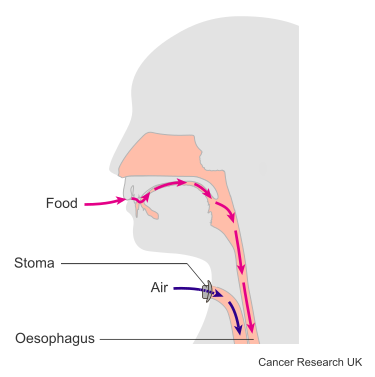
You might need a stoma if you have surgery to remove and rebuild part of the structures in your face. This type of surgery is called a flap repair. But you are only likely to need the stoma until you can breathe normally again through your nose and mouth. This is once the swelling from the flap repair has gone down.
A plastic stoma tube keeps the stoma open. It goes down into your airway. Your nurse will keep the tube clean and make sure it doesn't block. Let them know if it becomes difficult to breathe.
While you have the stoma you won't be able to speak. This can be very frightening and frustrating. It might make you feel as though you have no control over things. The staff will be very aware of this and will visit you often to see if you need anything.
You will have a call bell close by so that you can call for help whenever you need it. Your nurse will also give you a pen and paper or an electronic device. Write down or type anything that you want to say.
When the swelling from your operation has gone down, your surgeon will remove the stoma tube. You then have an operation to close the stoma so that you can breathe normally through your nose again.
Last reviewed: 08 Jan 2024
Next review due: 08 Jan 2027
Waking up from surgery can feel strange, but knowing what to expect can help you feel more in control.
The type of surgery you have for nasal and paranasal sinus cancer depends on the position and stage of your cancer.
Your treatment depends on several factors. These include what type of nasal and paranasal sinus cancer you have, how big it is, whether it has spread (the stage) and the grade. It also depends on your general health.
Cancer can start in the lining of the space behind the nose (nasal cavity) or the nearby air cavities (paranasal sinuses) and sometimes spread to lymph nodes and rarely other parts of the body.
There is support available during and after treatment to help you cope. This includes support from your clinical nurse specialist, cancer charities, community services, and family and friends.



