Stages, types and grades
The stage of a cancer tells you how big it is and how far it has spread. It helps your doctor decide the best treatment for you.
TNM system stands for Tumour, Node and Metastasis. It is the most common way to stage nasal and paranasal sinus cancer. Doctors may also use the number system.
Find out about the number staging system for ethmoid sinus cancer
Tumour describes the size of the tumour (area of cancer).
Tis (carcinoma in situ) means the tumour is in the top layer of cells that line the inside of the ethmoid sinus and has not grown deeper.
T1 means the tumour is only in one part of the ethmoid sinus, but it may have grown into the bones of the sinus.
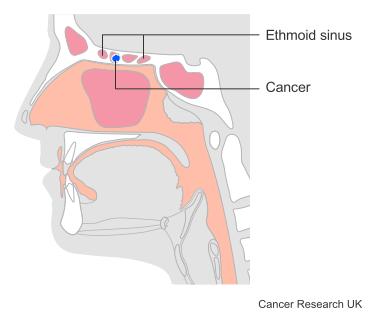
T2 means the tumour has grown into other parts of the ethmoid sinus, or into both the nasal cavity and ethmoid sinus. It may have grown into the bones of the nasal cavity or ethmoid sinus.
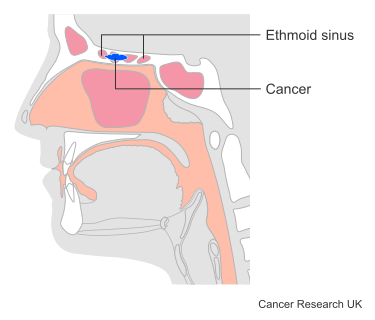
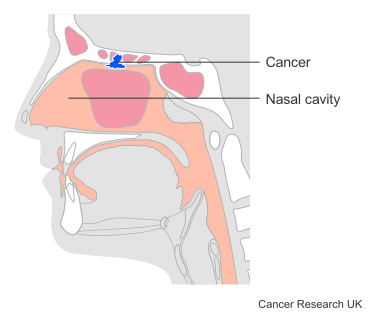
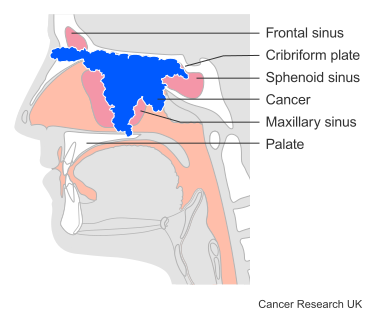
T3 means the tumour has spread into the side or bottom of the eye socket, the maxillary sinus, the roof of the mouth (palate) or the bone that separates the nose from the brain (cribriform plate).
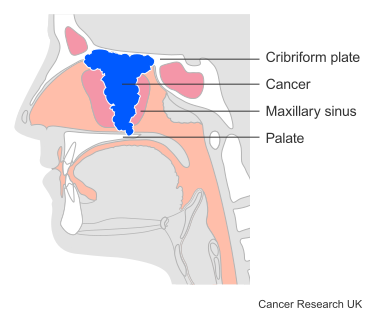
T4 is split into two groups:
T4a means the tumour has spread into the:
front part of the eye socket
skin of the nose or cheek
sphenoid or frontal sinuses, or bones in the face (pterygoid plates)
This is also called moderately advanced local disease.
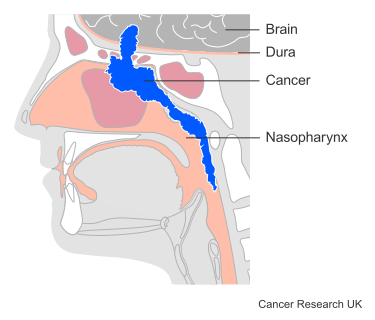
T4b means the tumour has spread into the:
back part of the eye socket
brain
layer of tissue covering the brain (dura)
parts of the skull
some of the nerves that connect the brain to the body (cranial nerves), or the area connecting the back of the nose to the back of the mouth (nasopharynx)
This is also known as very advanced local disease.
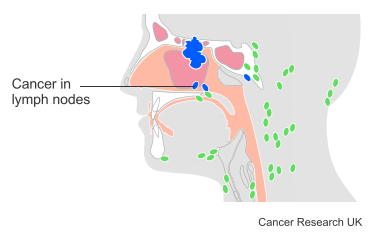
Node (N) describes whether the cancer has spread to the lymph nodes.
N0 means there are no cancer cells in nearby lymph nodes.
N1 means there are cancer cells in one lymph node on the same side of the neck as the tumour, but the node measures 3cm across or less.
N2 is split into 3 groups based on how many lymph nodes are affected, their size and if they are on the same side or both sides of the neck:
N2a means there are cancer cells in one lymph node, on the same side of the neck, that is more than 3cm across but no more than 6cm
N2b means there are cancer cells in more than one lymph node on the same side of the neck, but none of them is more than 6cm across
N2c means there are cancer cells in at least one lymph node on the other side of the neck (or on both sides), but none are more than 6cm across
N3 is split into 2 groups based on the size of the lymphnode and whether it has spread outside the lymphnode:
N3a means that the cancer has spread to at least one lymph node that is larger than 6 cm across
N3b means it has spread to a lymph node and has grown outside of the lymph node
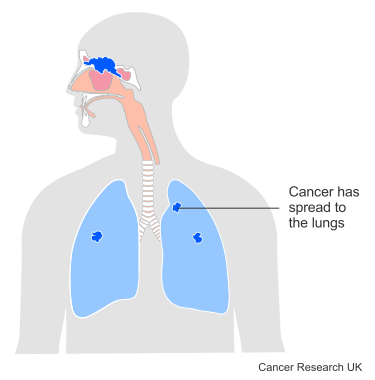
Metastasis (M) describes whether the cancer has spread to a different part of the body.
M0 means the cancer has not spread to other parts of the body.
M1 means the cancer has spread to other parts of the body, such as the lungs, brain, bone or liver.
Together, the T, N and M stages give a complete description of the stage of your cancer. For example, if you have a T2, N0, M0 cancer of the ethmoid sinus, you have a tumour that has begun to grow into other parts of the ethmoid sinuses, the lymph nodes are clear and there is no spread of your cancer to other parts of the body.
The grade of a cancer tells you how much the cancer cells look like normal cells. There are 3 grades of ethmoid sinus cancer:
grade 1 (low grade) - the cancer cells look very much like the normal ethmoid sinus cells
grade 2 (intermediate grade) - the cancer cells look slightly like normal ethmoid sinus cells
grade 3 (high grade) - the cancer cells look very abnormal and very unlike normal ethmoid sinus cells
The word differentiation means how developed or mature a cell is. So you may hear your doctor describe grade 1 cancer cells as well differentiated. Grade 2 cancer cells are moderately differentiated. Grade 3 cancer cells are poorly differentiated.
The grade of the cancer gives your specialist a guide as to how the cancer is likely to behave. Low grade cancers are usually slower growing and less likely to spread.
High grade cancers are likely to be faster growing and are more likely to spread. This is only a guide. Your specialist will consider all your test results when deciding which treatment is best for you.
Last reviewed: 12 Jan 2024
Next review due: 12 Jan 2027
The number staging system uses the TNM system to divide cancers into stages. There are 5 stages of ethmoid sinus cancer, numbered from 0 to 4.
The tumour, node and metastasis (TNM) staging and grading for nasal cavity cancer helps doctors decide on your treatment.
The number staging system uses the TNM system to divide cancers into stages. There are 5 stages of nasal cavity cancer, numbered from 0 to 4.
The tumour, node and metastasis (TNM) staging and grading for maxillary sinus cancer helps doctors decide on your treatment.
The number staging system uses the TNM system to divide cancers into stages. There are 5 stages of maxillary sinus cancer, numbered from 0 to 4.
Cancer can start in the lining of the space behind the nose (nasal cavity) or the nearby air cavities (paranasal sinuses) and sometimes spread to lymph nodes and rarely other parts of the body.



