
Children’s cancers
Acute lymphoblastic leukaemia (ALL) is a type of blood cancer. It starts from called lymphocytes in the . It usually develops quickly over days or weeks.
This information is about ALL in children, we have information about adult ALL in another section.
Go to information about adult acute lymphoblastic leukaemia (ALL)
To understand how and why leukaemia affects your child as it does, it helps to know how you make blood cells.
Your body makes blood cells in the bone marrow. The bone marrow is the soft inner part of your bones. You make blood cells in a controlled way, as your body needs them.
All blood cells start as the same type of cell, called a . This stem cell then develops into:
myeloid stem cells – which become white blood cells called monocytes and neutrophils (a type of granulocyte)
lymphoid stem cells – which become white blood cells called lymphocytes
erythroblasts – which become red blood cells
megakaryocytes – which become platelets
The diagram helps explain this:

In acute lymphoblastic leukaemia, the bone marrow makes too many lymphoid blast cells. These lymphoblast cells are immature and are unable to grow into normal lymphocytes.
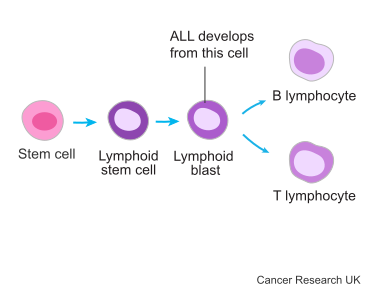
There are 2 main types of acute lymphoblastic leukaemia. These are called T cell and B cell. The type explains if the leukaemia is mostly made up of T or B lymphoblasts. These cells are shown on the diagram above.
Doctors might also classify your child’s leukaemia further, depending on other factors, like genetic changes in the leukaemia cells. Ask them to explain to you exactly what type of ALL your child has.
The word acute means that the leukaemia can develop quickly. The lymphoblasts grow and divide rapidly and build up in the blood and bone marrow.
The leukaemic cells eventually spread into other parts of the body, including the:
(they are an important part of our immune system)
liver
(the spleen is also part of the immune system)
central nervous system (brain and spinal cord)
testicles in boys
Leukaemia affects your child because of the changes the leukaemia is having on the:
red blood cells
white blood cells
platelets

The lymphoblasts occupy the bone marrow. So, there isn't enough space to make normal blood cells. Leukaemia treatment also affects the bone marrow’s ability to make a normal number of blood cells. This results in a low number of normal white cells, red blood cells and platelets. When they build up in the bone marrow they can make the bones ache.
White blood cells help fight infection. A lower number means an increased risk of infections.
Having too few red blood cells (called anaemia) makes your child tired and breathless. And if your child doesn't have enough platelets, you can have bleeding problems, for example, nosebleeds.
Lymphoblasts can build up in parts of the lymphatic system, such as the spleen, liver and lymph nodes, making them swell. This can make their tummy (abdomen) swell and feel uncomfortable. You might notice your child has jumped a nappy or trouser size. The leukaemia cells can also spread to the brain. And to the testicles in boys.
All these changes cause the signs and symptoms of ALL.
Find out more about the symptoms of childhood ALL
ALL is most common in young children aged 0 to 4. Around 400 children are diagnosed with ALL in the UK each year.
ALL is less common in adults than children and young people. Although treatment is similar, we would like you to get the most reliable information for your cancer type. So, we also have information for adults diagnosed with ALL.
Find out more about adult acute lymphoblastic leukaemia
We don’t know what causes childhood ALL. For most children with ALL no underlying cause can be found. But some children with certain conditions are at higher risk of leukaemia than others. But we can’t say for sure who will develop it.
Some of the possible genetic conditions that increase a child’s risk of developing ALL include , and .
Doctors have found that some children with ALL have changes in specific genes. But it’s not clear why these changes happen. Doctors are likely to find changes in different genes in the future. There are other things that can go wrong with genes and some of the changes that happen to these genes can increase a child risk of developing ALL.
Parents of children with cancer can sometimes feel like something they did, or didn’t do, caused their child’s cancer. We don’t know what causes, or how to prevent most childhood cancers including leukaemia. No one should feel blamed.
We have more information on the causes and risks of childhood cancer here
Get information on the tests your child might have for leukaemia.
Your child is referred to a specialist children’s doctor if they have symptoms that could be acute lymphoblastic leukaemia (ALL). Find out what happens.
Treatment for acute lymphoblastic leukaemia (ALL) in children is divided into different phases The main treatment is chemotherapy. Find out about the other treatments and different phases.
Researchers are looking into new treatments for acute lymphoblastic leukaemia as well as ways to reduce the side effects treatment can cause in children and young people. Find out what research is going on.
Find out about the possible late effects of treatment and how your child is followed up after treatment.
It is extremely distressing to find out that your child has leukaemia. Find out about what you can do to help you and your family cope when your child is diagnosed with acute lymphoblastic leukaemia (ALL).
Last reviewed: 18 Nov 2024
Next review due: 18 Nov 2027



