
About Cancer
Primary bone cancer starts in the cells of the bones. This is different from or bone cancer, which spreads to the bones from elsewhere in the body. Primary bone cancer is a rare. It is also called bone sarcoma.
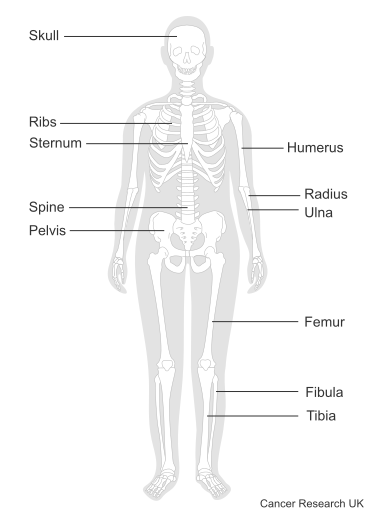
There are more than 200 bones in the human body. Together they form the skeleton. The bones:
support the body
protect parts of the body
act as levers for the muscles so we can stand and move
The long bones of the arms and legs are supporting bones. The bones of the rib cage protect the organs of the chest such as the lungs and heart. The skull bones protect the brain.
The end of every long bone is covered with a smooth tissue called cartilage. Tendons hold the long bones together where they join.
Together, cartilage and tendons form joints that allow the bones to move smoothly against each other.
Bone is a framework of soft supporting tissue called connective tissue. It also contains minerals such as calcium which hardens the bones. This framework gives the bone its strength. Throughout this framework are the bone cells.
There are 3 main types of cells in our bones which work together to maintain the shape, strength and health of the bones. These are the:
osteoblasts
osteoclasts
osteocytes
If a bone gets damaged, the osteoblasts make new bone to repair the damage.
The osteoclasts break down any extra bone framework that the osteoblasts make and reshape the bone.
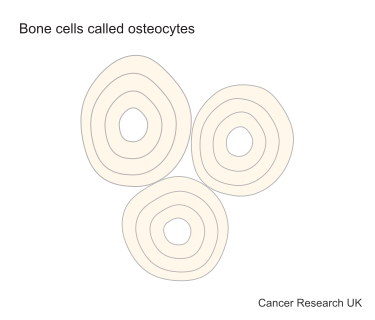
When bone forms, osteoblasts are trapped within it and become part of the framework. They are then called osteocytes and maintain the bone structure.
Inside some of the bones of the body is a space that is filled with . Blood cells are made in the bone marrow. All blood cells develop from which are found in the bone marrow.
Primary bone cancer starts in cells of the bones. Doctors sometimes use the term bone sarcoma when they talk about primary bone cancer. Sarcomas are cancers that start in any connective tissue in the body. This includes the bones but also:
muscles
tendons
blood vessels
fatty tissues
There are several different types of primary bone cancer. The most common types are:
osteosarcoma - is more common in the upper arms or legs (usually around the knee)
chondrosarcoma - is mostly found in the long bones such as the fibula, femur, tibia, humerus, radius and ulna. Other sites include , shoulder blades, or ribs
Ewing sarcoma - often starts in the pelvis, long bones, ribs or vertebrae (bones that protect the and make up the spinal column)
Other rarer types include:
spindle cell sarcoma - is more common in the bones of the legs
chordoma - most commonly starts in the bone at the bottom of the spine (sacrum), the bones (vertebrae) of the back (spine), or the bones in the base of the skull
Read more about different types of bone cancer
A type of cancer called myeloma can affect the bones. People sometimes call it bone cancer. It develops from cells in the bone marrow called plasma cells. But it is not a type of primary bone cancer because it does not start in the bone itself. So if you have myeloma, your treatment will be different.
When a primary bone cancer starts to grow, the cancer cells multiply and begin to break down the bone. This weakens the bone in that area.
Bone cancer cells can break away from the primary bone tumour and travel to other organs, usually the lungs or other bones. There they can grow into secondary tumours.
Around 650 people are diagnosed each year in the UK with bone cancer. That’s nearly 2 cases every day.
Bone sarcoma is linked to age. Unusually for cancer, it is more common in older children and teenagers. And then it becomes more common again in older people.
Read about the risks and causes of bone cancer
Pain, swelling and problems moving around are the most common symptoms of bone cancer. But the symptoms of bone cancer can vary depending on the size of the cancer and where it is in the body. Find out more.
We don’t know what causes most bone cancers. But there are some factors that may increase your risk of developing it. Find out what these may be.
You usually start by seeing your GP. They will examine you and might refer you for tests or to see a specialist. Find out about how to get the most out of seeing a GP or specialist. You can also find out more about the possible tests you might have.
You usually have a number of tests to check for cancer that starts in the bones. This includes scans and having a sample of bone tissue taken (a biopsy). If the tests show that you have a cancer, you have more tests to find out more about your bone cancer.
The stage of a cancer tells you how big it is and whether it has spread. The grade means how abnormal the cells look under the microscope.
There are several different types of primary bone cancer that can start in the cells of the bones. Find out about the different types.
The main treatments for cancer that starts in your bone include surgery, chemotherapy and radiotherapy. You might have a combination of these treatments. Find out more.
Find out about the latest UK research looking at primary bone cancer, as well as how you can take part in clinical trials
Last reviewed: 11 Feb 2025
Next review due: 11 Feb 2028



