Stages, types and grades of vulval cancer
Knowing the type of cancer you have helps your doctor decide on which treatment you need.
Your doctor takes a sample of tissue to find out which type of vulval cancer you have. This is a biopsy. They send the tissue sample to a laboratory, where a looks at it under a microscope.
The cells of the different types of vulval cancer look different, so the pathologist is able to tell which type you have.
Read about having a vulval biopsy
Squamous cell is the most common type of vulval cancer. About 90 out of 100 vulval cancers (about 90%) are this type.
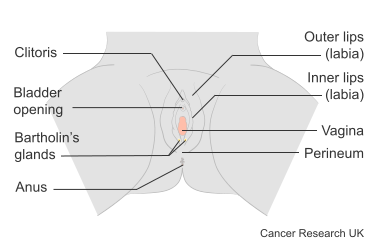
Most squamous cell cancers start on the lips of the vulva (labia). More rarely, it can start in the clitoris and Bartholin gland.
This is the second most common type of vulval cancer. It is most often found in women who no longer have periods (post menopause).
White women are at higher risk of vulval melanoma than black women.
Find out more about vulval melanoma
This is a rare type of skin cancer. It usually affects the surface of the skin of the vulva and is slow growing. It is most often found in women who no longer have periods.
Paget’s disease of the vulva causes itching and pain. Treatment includes surgery or a cream called imiquimod.
This is also known as extramammary Paget’s disease as it is similar to Paget’s disease of the breast.
Other rarer cancers can develop in the vulva.
This is a type of squamous cell carcinoma. You usually have treatment with surgery.
This type of cancer develops from the deepest layer of skin cells called basal cells.
There are different types of sarcomas that can affect the vulva. They include angiomyxoma and rhabdomyosarcoma.
The Bartholin’s glands make a fluid, which acts as a lubricant during sexual intercourse. These cancers are usually advanced by the time they are diagnosed. This means that they have spread to other parts of the body.
Last reviewed: 01 Sept 2025
Next review due: 01 Sept 2028
Vulval melanoma is a rare type of cancer. It develops from the cells in the skin that produce pigment. These are called melanocytes. You usually have surgery as a treatment for vulval melanoma.
The stage and grade of a cancer helps your doctor decide which treatment you need. In the UK, doctors usually use the FIGO system to stage vulval cancer.
Vulval intraepithelial neoplasia (VIN) is a skin condition of the vulva. Find out about symptoms and treatment options.
Your treatment depends on a number of factors. Surgery is the most common treatment for vulval cancer. Chemotherapy with radiotherapy (chemoradiotherapy) is also a treatment.
You have a number of tests to find out if you have vulval cancer. These include a vulval examination and a biopsy.
Vulval cancer is a rare cancer. It can start in any part of the female external sex organs, the vulva. The treatment you need depends on how big the cancer is and whether it has spread.



