Stages and types of eye cancer
Cancer that starts in the eye is called primary eye cancer. This section is about primary eye cancer.
Sometimes cancer can spread to the eye from another part of the body. This is called secondary eye cancer. In women this is most likely to happen with breast cancer, and in men this is most likely to happen in lung cancer.
If your cancer has spread to the eye from somewhere else in the body, this is not the right information for you. Go to information about your primary cancer.
Eye cancers are called ocular cancers. Ocular is the medical name for the eye. Eye cancer is very rare. Around 880 cases are diagnosed in the UK each year.
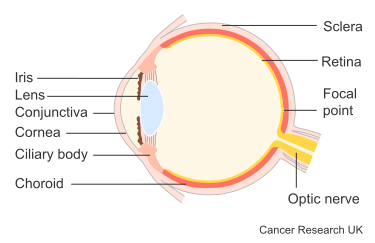
Cancers affecting the inside of the eye are intraocular. Those affecting the outside of the eye are extraocular.
Intraocular cancers (affecting the inside of the eye) include the type listed below.
The areas around the eyes are the orbit (eye socket) and the accessory muscles. Cancers that develop in these parts of the eye are cancers of muscle, nerve and skin tissue.
Basal cell carcinoma (BCC) is a cancer found on the skin around the body, often caused by sun exposure. It is also called a ‘rodent ulcer’. It can be found on the eyelids. Doctors treat it like any other basal cell skin cancer.
Most squamous cell cancers are found on the skin and develop in areas that are exposed to the sun. This includes the eyelids.
Squamous cell cancers don't often spread. If they do, it's most often to the deeper layers of the skin. They can spread to nearby lymph nodes and other organs causing secondary cancers, but this is unusual.
Read more about basal cell and squamous cell skin cancer
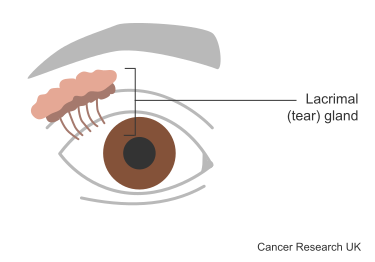
This is a rare cancer that starts in the lacrimal gland of the eye. The glands produce a fluid that cleans and protects the surface of the eyelid. Our tears are part of this fluid.
There are a few different types of lacrimal gland cancer, including lymphoma and adenoid cystic carcinoma. Symptoms include:
a swelling or bulging of the eye
a lump around the area of the lacrimal gland (towards the outer part of the eyelids)
pain around one eye
The treatment you have depends on the type and size of the cancer. For adenoid cystic carcinoma of the lacrimal gland you usually have surgery first. You may also have radiotherapy or chemotherapy, or both after surgery. For lymphoma of the lacrimal gland you may have radiotherapy and chemotherapy.
Find out more about lacrimal gland cancer
Rhabdomyosarcoma (RMS) is a type of soft tissue sarcoma. Soft tissue includes the muscles, tendons and nerves. Orbital rhabdomyosarcoma starts in the soft tissue around the eye. It affects mainly young children, but sometimes it is diagnosed in babies and the elderly.
Symptoms include:
a droopy eyelid
bulging of the eye
a swollen eye
As with other eye cancers, orbital rhabdomyosarcoma is a rare cancer. It is important to see your doctor if you notice any symptoms. The outcome of treatment (prognosis) can be good with early diagnosis.
Treatment depends on the stage and size of the orbital rhabdomyosarcoma. Treatments include surgery, chemotherapy or radiotherapy, or a combination of these. Your specialist will explain what treatment you or your child will have.
Last reviewed: 04 Dec 2024
Next review due: 04 Dec 2027
The stage of your eye cancer tells you how big it is and how far it has spread.
Your GP or optometrist will ask you about your symptoms, and they might examine you. They may arrange tests or a referral to a specialist.
Eye cancer symptoms are not always obvious. It might be picked up during a routine eye test. Symptoms include changes to your vision or a change in the appearance of the eye.
We don't know what causes most eye cancers. But there are some factors that can increase your risk of developing it including being older or having certain medical conditions.
Your treatment depends on several factors. These include what type of eye cancer you have, how big it is and whether it has spread (the stage). It also depends on your general health. Treatments include surgery, radiotherapy and cancer drugs.
Eye cancer includes different types of cancer. The type of eye cancer you have depends on the type of cell it starts in. There are different parts of the eye, and some of these are more likely to get cancer than others.