Types
Pineal region brain tumours develop in the pineal gland or the surrounding tissue.
The pineal gland is in the middle of the brain, just behind the brain stem. It makes the hormone melatonin that controls sleep.
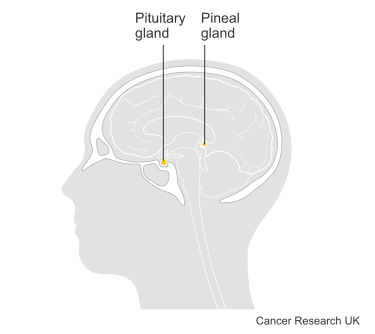
Tumours in this part of the brain can block the cerebrospinal fluid (CSF) channels. The cerebrospinal fluid is a clear fluid that surrounds and protects the brain and the spinal cord.
Blocking the CSF can cause a build up of fluid in the brain. This can lead to increased pressure.
Symptoms of increased pressure include:
headaches
feeling or being sick
problems with walking and balancing
Find out more about symptoms of increased pressure inside the brain
There are many types of tumours that can start in the pineal region. The 2 main types are:
germ cell tumours
tumours that start in the pineal gland (pineal gland tumours)
Tumours can also start in the supporting cells (glial cells) in or around the pineal gland. These are called gliomas.
We have more information about gliomas
Pineal region tumours are rare. Less than 1 in every 100 brain tumours (less than 1%) start in the pineal region. They are more common in children and young people than adults.
You have tests to diagnose a pineal region tumour. Your doctor checks the size of the tumour and its exact location. This helps your doctor plan your treatment. The test you might have include:
or
a of the tumour
a test to take a sample of fluid that surrounds the brain and spinal cord (lumbar puncture)
blood tests
Some germ cell tumours make substances that can show in the blood. These are called tumour markers. If your doctor thinks that you have a germ cell tumour, you might have blood tests to look for:
alpha fetoprotein (AFP)
human chorionic gonadotropin (HCG)
We have more information about the tests you might have to diagnose a brain tumour
Treatment depends on the type of tumour you have. Your doctors also plan your treatment depending on:
the size of the tumour
your symptoms
the grade
For a germ cell tumour, you usually have or a combination of and radiotherapy. For some people, this is the only treatment they need. Other people might have an operation to remove any remaining tumour.
If the germ cell tumour comes back, you might have more chemotherapy and radiotherapy.
Read about chemotherapy and radiotherapy for brain tumours
Treatment depends on the type and grade of pineal gland tumour you have. For a pineocytoma, you usually have surgery to remove as much of the tumour as possible. This might be all the treatment you need. Or your doctor might recommend that you have radiotherapy after surgery. This is to help stop the tumour from coming back.
For high grade tumours, such as pineoblastomas, you might have surgery, radiotherapy and chemotherapy.
Find out more about surgery for brain tumours
Pineal gland tumours can cause a build up of cerebrospinal fluid on one area of the brain. The excess fluid increases the pressure on the brain which can be serious. This is called hydrocephalus.
You might have surgery to place a shunt if you have this. The shunt is a thin tube that is put in the brain to allow the fluid to flow elsewhere.
We have more information about surgery to remove fluid from the brain
You have regular appointments with your doctor or nurse after your treatment finishes. At each visit, they will examine you and ask how you are feeling. They will also ask if you have had any symptoms or side effects, and if you have any worries.
You might have an MRI scan on some visits, and you might also have hearing tests.
How often you have these appointments depends on your individual situation.
Read more about follow up appointments after treatment for a brain tumour
Coping with a diagnosis of a brain tumour can be difficult, both practically and emotionally. It can be especially difficult when you have a rare tumour. Being well informed about the type of tumour you have, and its treatment can make it easier to cope.
It can often help to talk about how you feel. You may find it helps to talk to friends or family. Your specialist nurse is also there to support you and your family. They can listen to you, talk through how you feel, and give practical advice.
Find out what you can do, who can help and how to cope with a brain tumour
Doctors are always trying to improve the diagnosis and treatment of brain tumours. As part of your treatment, your doctor might ask you to take part in a clinical trial. This might be to test a new treatment or look at different combinations of existing treatments.
Find out about the latest UK research and how you can take part in a clinical trial
Last reviewed: 30 Jun 2026
Next review due: 30 Jun 2029
Primary brain tumours are tumours that start in the brain. They can start anywhere in the brain and there are many different types of tumours.
You usually start by seeing your GP who might refer you to a specialist. Or you might go to Accident and Emergency (A&E) if you suddenly have severe symptoms.
Treatment for a brain or spinal cord tumour depends on the type of tumour you have, where it is and your general health.
Survival depends on different factors such as the type, position and grade of your brain or spinal cord tumour.
It can be difficult to find out that you have a brain tumour. There is practical and emotional support available to help you, your family and your friends cope with a brain or spinal cord tumour.
Primary brain tumours are cancers that start in the brain. Tumours can start in any part of the brain or related structures.

About Cancer generously supported by Dangoor Education since 2010. Learn more about Dangoor Education


Search our clinical trials database for all cancer trials and studies recruiting in the UK.

Connect with other people affected by cancer and share your experiences.

Questions about cancer? Call freephone 0808 800 40 40 from 9 to 5 - Monday to Friday. Alternatively, you can email us.
