Types of external radiotherapy
You can have superficial radiotherapy with low energy x-rays (photons) or electrons. Your doctor will decide which one you need. This depends on the size and depth of the cancer and where it is in the body.
Read more about external radiotherapy
You have a planning appointment before you start radiotherapy. This is so that your treatment team can work out the dose of radiotherapy you need and exactly where you need it.
The planning for superficial radiotherapy usually involves your doctor marking with pen the area that needs treatment. Your therapy radiographers then take measurements and photographs. Sometimes they might also take a tracing of the area. This is so they can set you up in the correct position each time you have treatment.
Sometimes you might need to have a CT scan to check how deep the radiation needs to go. This takes a few minutes.
Find out more about having a CT scan when planning your radiotherapy treatment
Depending on the treatment area, you might have lead shielding made for you. This is to protect nearby areas of the body from radiation. For example, if you have skin cancer on your nose, your radiographer or mould room technician might make a narrow strip of lead to fit your nostril.
In some cases, they make a mould instead to fit the shape of the cancer and protect nearby healthy cells. This is individual to you and so you might need to go in for an extra appointment. Your radiographers will let you know if you do.
To have the treatment you lie on a radiotherapy couch. Your therapeutic radiographers help you get into the right position and put on any moulds or shields that you might need. They use the photographs, measurements and tracings to get you in the correct position.
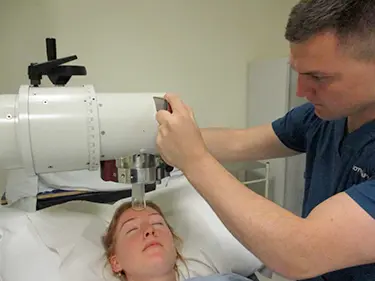
Your radiographers put part of the machine (applicators) on or close to your skin. This won't hurt. The machine stays in this position for the whole treatment. The treatment usually lasts a few minutes.
Your radiographers go out of the room for a few minutes while you have the treatment. They can see and hear you the whole time. You can't feel anything when you actually have the treatment.
After treatment, your radiographers go back into the room and help you off the couch. You can then go home. You are not radioactive so can be around other people, including children.
Your doctor will tell you how many days you have radiotherapy for. This can vary from a single day to every week day for up to about 6 weeks.
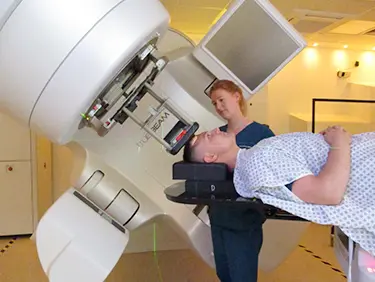
You have electron treatments on a LINAC. A LINAC is the most common radiotherapy machine. Radiographers attach extra parts (applicators) to the LINAC to treat skin cancer with electrons.
Low energy photon treatments use a much smaller machine than a LINAC. It has many movable parts and is usually on wheels.
Your skin in the treatment area is likely to get red or sore after having superficial radiotherapy. It might scab or more rarely bleed. The side effects may carry on for a few weeks after treatment before they start to get better.
Your hair will also fall out in the area being treated. Sometimes this hair loss can be permanent.
During treatment you should:
keep the treatment area out of the sun or use a high SPF sun block
use unfragranced simple soap and moisturiser
pat your skin dry with a towel
avoid swimming (and for a few weeks afterwards)
Months or years later, your skin might look paler or you might see small veins in the treatment area. Your skin will be much more sensitive to the sun and you should continue to try to keep the area out of the sun or use a high SPF sun block.
Your radiographers will give you more information about skin care during and after treatment.
Read general information about the effects of radiotherapy on the skin
Last reviewed: 09 Nov 2023
Next review due: 09 Nov 2026
There are many different types of external radiotherapy. The treatment you have depends on your cancer and its position in the body.
Non melanoma skin cancer includes basal cell carcinoma, squamous cell carcinoma and other rare types. They tend to develop most often on skin that has been exposed to the sun.
Radiotherapy can cause different side effects depending on which part of the body is being treated. Find out what these side effects are and how they affect you during and after treatment.
Find out about cancer treatment with radiotherapy, including external radiotherapy, internal radiotherapy, side effects, radiotherapy for symptoms and follow up after treatment.
Search for the cancer type you want to find out about. Each section has detailed information about symptoms, diagnosis, treatment, research and coping with cancer.

About Cancer generously supported by Dangoor Education since 2010. Learn more about Dangoor Education


Search our clinical trials database for all cancer trials and studies recruiting in the UK.

Connect with other people affected by cancer and share your experiences.

Questions about cancer? Call freephone 0808 800 40 40 from 9 to 5 - Monday to Friday. Alternatively, you can email us.
